
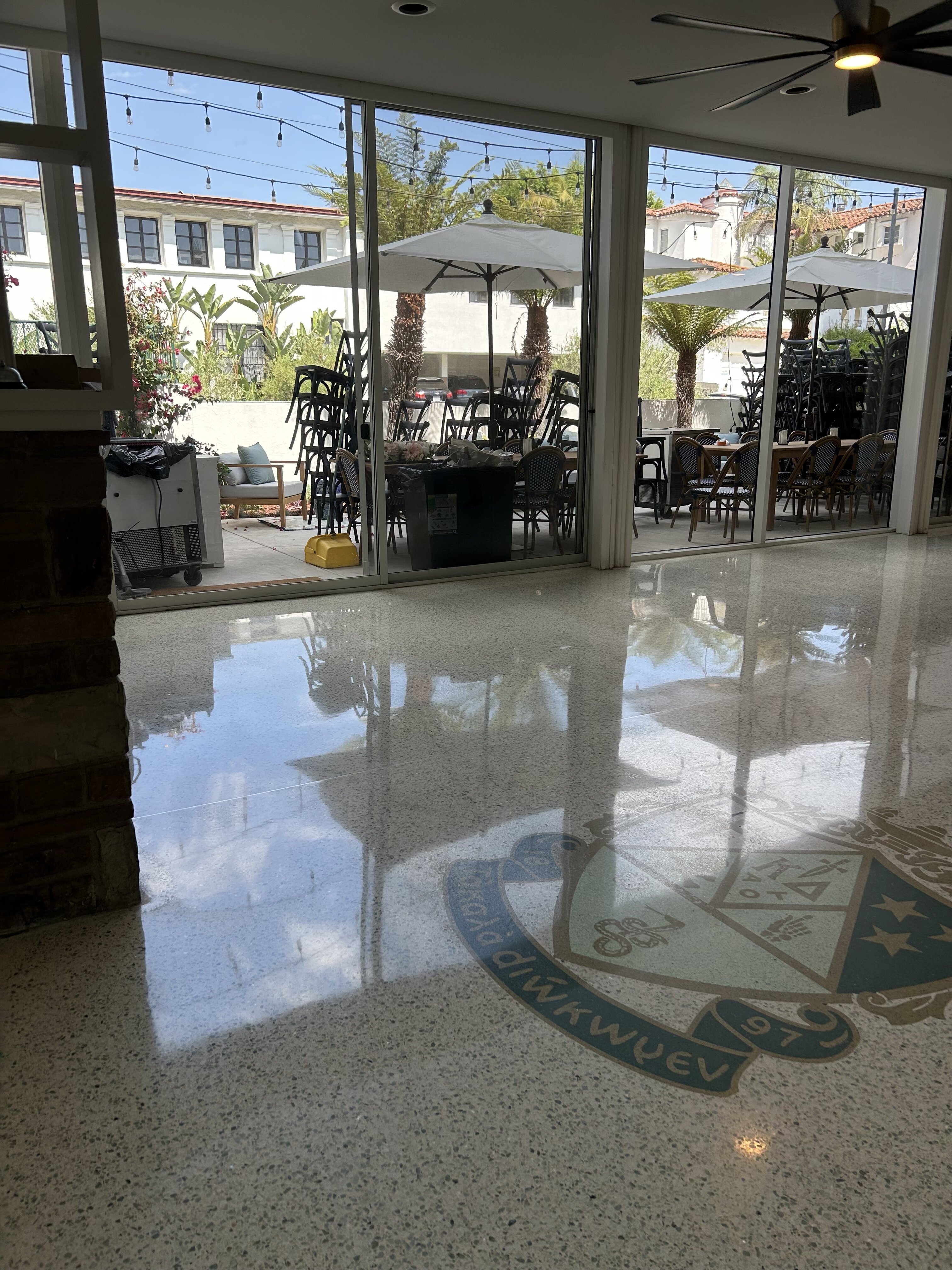
Polished concrete is low maintenance by nature: there is no decorative coating to peel or delaminate, and with proper maintenance it can provide decades of service. Regular dust removal, prompt cleanup of spills, and periodic professional attention keep the finish looking its best.
Everyday care is simple
The biggest advantage of a mechanically polished floor is how little it asks of you. Regular dusting or dry mopping keeps grit from dulling the surface, and prompt cleanup of spills protects the finish.
Because the sheen comes from the refined concrete itself — not a coating on top — normal care preserves the natural, architectural appearance you invested in.
Protecting the finish in a working garage
Garages are working spaces. Vehicle fluids, road grime, and Southern California dust all find their way in, so prompt cleanup matters — especially for anything chemical or petroleum-based.
The ideal care routine depends on your concrete's condition, intended use, and exposure to chemicals or moisture. Your consultation is the right time to ask for guidance specific to your floor.
The long view
With proper maintenance, polished concrete can provide decades of service. Periodic professional attention can refresh the surface and keep the finish looking refined year after year.
That's the long-term value proposition: a premium, long-lasting finish that ages gracefully with your home.
Frequently asked questions
Is polished concrete more durable than epoxy?
Mechanically polished concrete doesn't rely on a decorative epoxy coating that can peel or delaminate. With proper maintenance, polished concrete can provide decades of service. However, the ideal finish depends on your concrete's condition, intended use, and exposure to chemicals or moisture.
Do you offer personalized consultations?
Yes. Every project begins with understanding your vision, evaluating your surfaces, and recommending a finish that complements your home's architecture, lifestyle, and aesthetic preferences.