
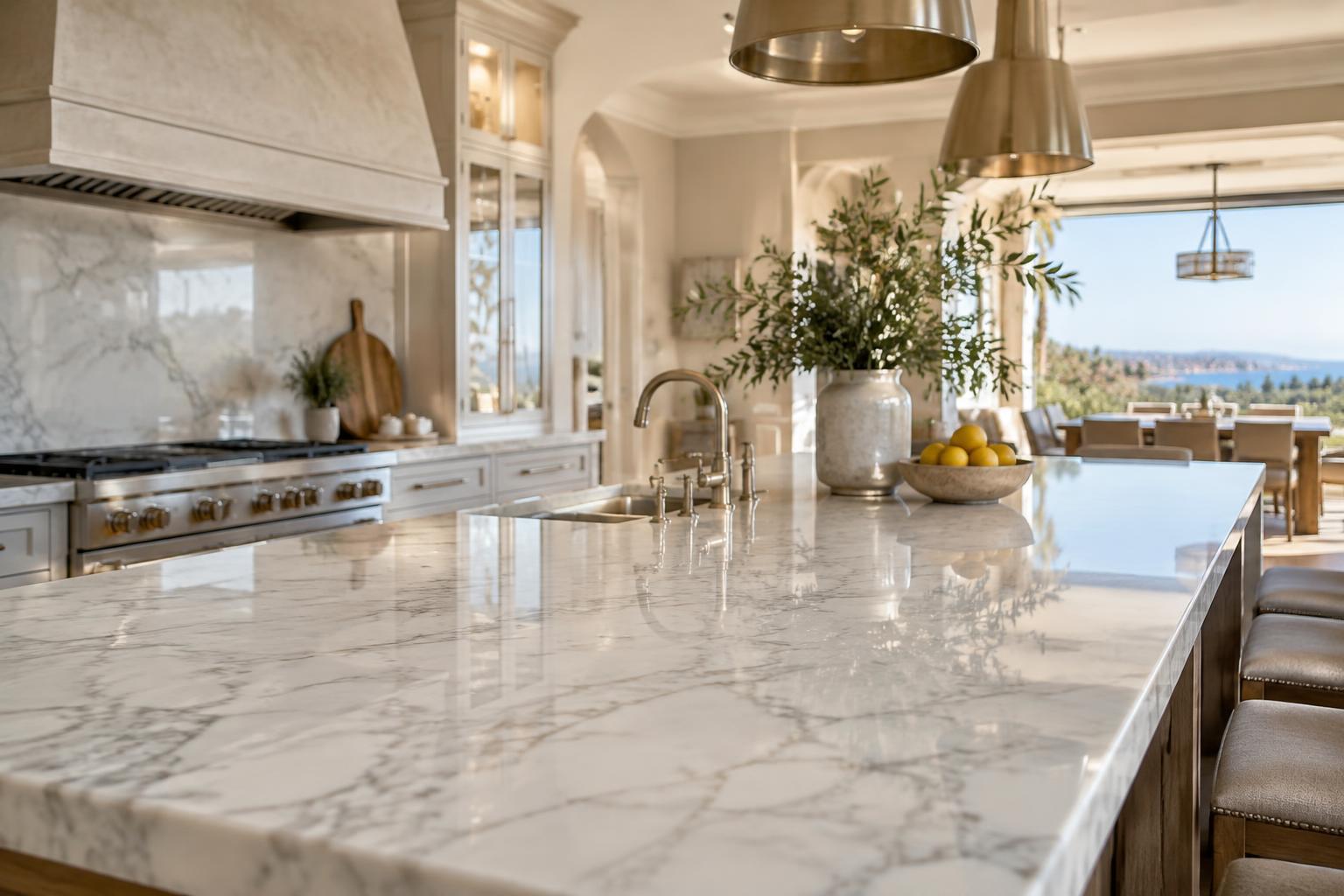
Dull, scratched, or worn marble can usually be restored rather than replaced. Professional honing and polishing remove or reduce many surface imperfections, restore the stone's natural luster, and preserve the original material — often avoiding the expense and disruption of replacement.
Why marble loses its luster
Marble is a natural, living surface. Daily use, foot traffic, cleaning products, and the occasional scratch gradually dull the finish — especially on kitchen countertops, bathroom vanities, and flooring.
The good news: that wear is usually in the surface, not the stone. The material underneath is still the same beautiful marble you chose.
What restoration actually does
Professional restoration uses specialized honing and polishing techniques to refine the stone's surface. Honing removes or reduces dullness, scratches, and wear; polishing brings back the natural luster.
Because restoration preserves the original stone, it often avoids the expense and disruption of replacement — and keeps a valuable architectural feature of your home intact.
Where restoration makes the biggest difference
Kitchen countertops and bathroom vanities are the most common candidates, along with residential stone flooring and decorative stone surfaces.
Every surface is evaluated individually. The goal is a finish that complements your home's architecture, lifestyle, and aesthetic — with realistic expectations from the start.
Frequently asked questions
Can you restore my marble, travertine, and other natural stone surfaces?
Yes. Nexara specializes in professional natural stone restoration, including marble, travertine, granite, limestone, and terrazzo. We restore dull, scratched, and worn surfaces through specialized honing and polishing techniques that revive their natural beauty.
Why restore natural stone instead of replacing it?
High-quality natural stone is a valuable architectural feature. Professional restoration can remove or reduce many surface imperfections, restore its natural luster, and preserve the original material, often avoiding the expense and disruption of replacement.