
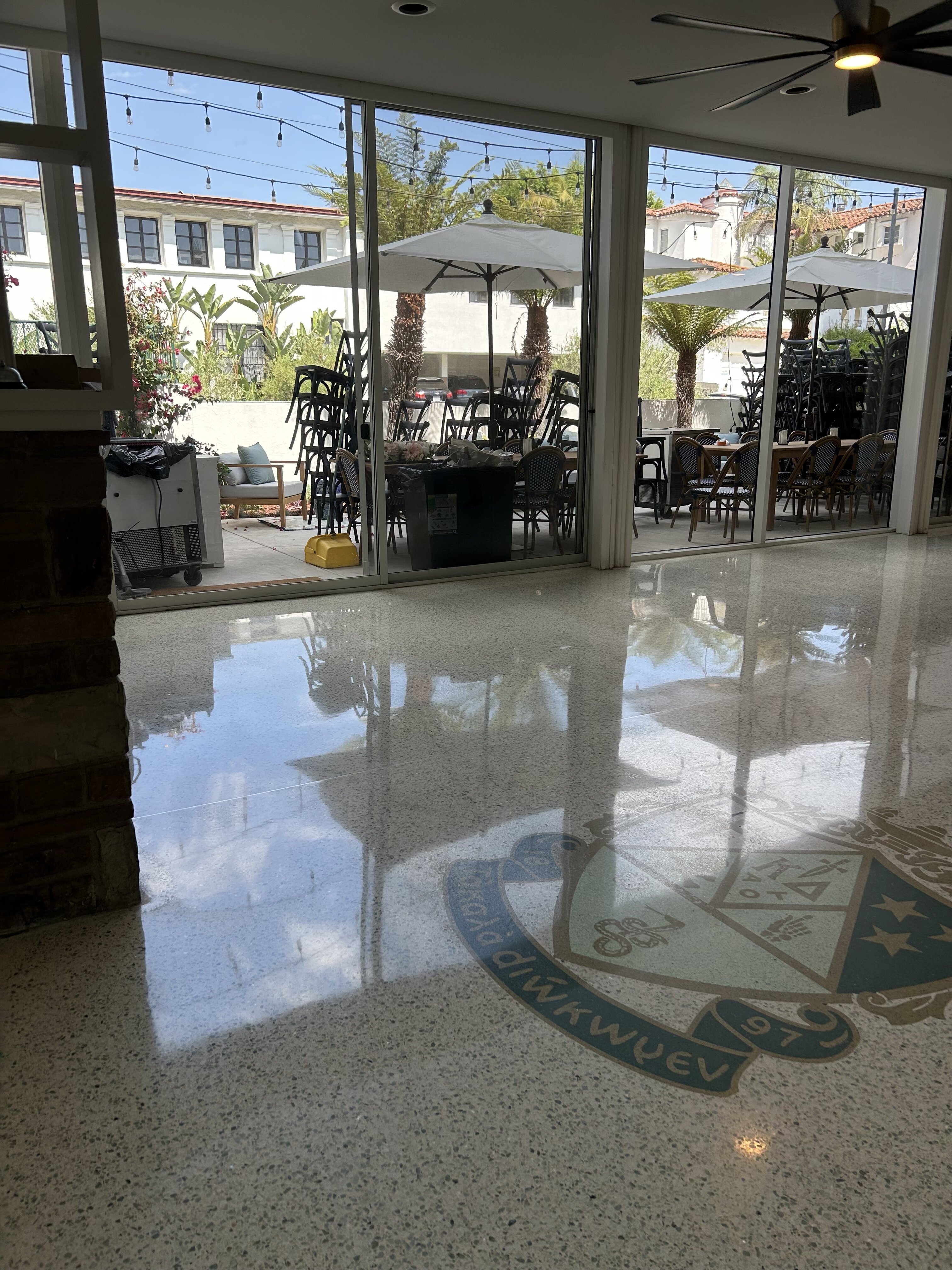
Polished concrete refines your existing slab through grinding, honing, and polishing, while epoxy and flake systems cover it with a decorative coating. Polished concrete offers a natural, architectural appearance with no coating to peel; epoxy offers color and flake options. The right choice depends on your concrete's condition, intended use, and exposure to chemicals or moisture.
Two different philosophies
Mechanically polished concrete enhances the existing surface. Professional grinding, honing, and polishing refine the slab itself, showcasing the concrete's natural character with a sleek, contemporary finish.
Epoxy and flake systems take the opposite approach: they cover the concrete with a decorative coating. That coating introduces artificial colors and flakes, and it is a layer applied on top of the slab rather than a refinement of it.
Appearance: natural vs. decorative
Polished concrete delivers a natural, architectural appearance. Its clean lines and subtle sophistication pair beautifully with modern, contemporary, minimalist, and transitional homes — common across Ontario, Rancho Cucamonga, and the newer communities of the Inland Empire.
Epoxy flake floors offer a more decorative look, with broadcast color flakes in a wide range of blends. Some homeowners prefer that aesthetic, and both approaches have their place.
Maintenance and longevity
Because mechanically polished concrete doesn't rely on a decorative coating, there is no coating that can peel or delaminate. With proper maintenance, polished concrete can provide decades of service, and day-to-day care is simple.
Coated systems can be a good fit where chemical resistance or a specific decorative look is the priority. The honest caveat: the ideal finish depends on your concrete's condition, intended use, and exposure to chemicals or moisture. A professional evaluation is the right first step either way.
Which is right for your garage?
If you value timeless design, natural materials, and understated elegance — especially for a custom garage or a private automotive collection — polished concrete creates a sophisticated, showroom-inspired finish.
Every slab is different. Nexara evaluates the concrete's condition, existing coatings, cracks, and previous repairs before recommending a finish, so you get realistic expectations and a result tailored to your home.
Frequently asked questions
Is polished concrete more durable than epoxy?
Mechanically polished concrete doesn't rely on a decorative epoxy coating that can peel or delaminate. With proper maintenance, polished concrete can provide decades of service. However, the ideal finish depends on your concrete's condition, intended use, and exposure to chemicals or moisture.
Will polished concrete complement my home's architecture?
Yes. Polished concrete pairs beautifully with modern, contemporary, minimalist, and transitional architecture. Its clean lines, natural appearance, and subtle sophistication create visual continuity between your garage and the rest of your property.
Is every concrete garage suitable for polishing?
Not necessarily. We evaluate the concrete's condition, existing coatings, cracks, and previous repairs before recommending a finish. Our goal is to provide realistic expectations and a customized solution that delivers exceptional results.